Addressing Stigma
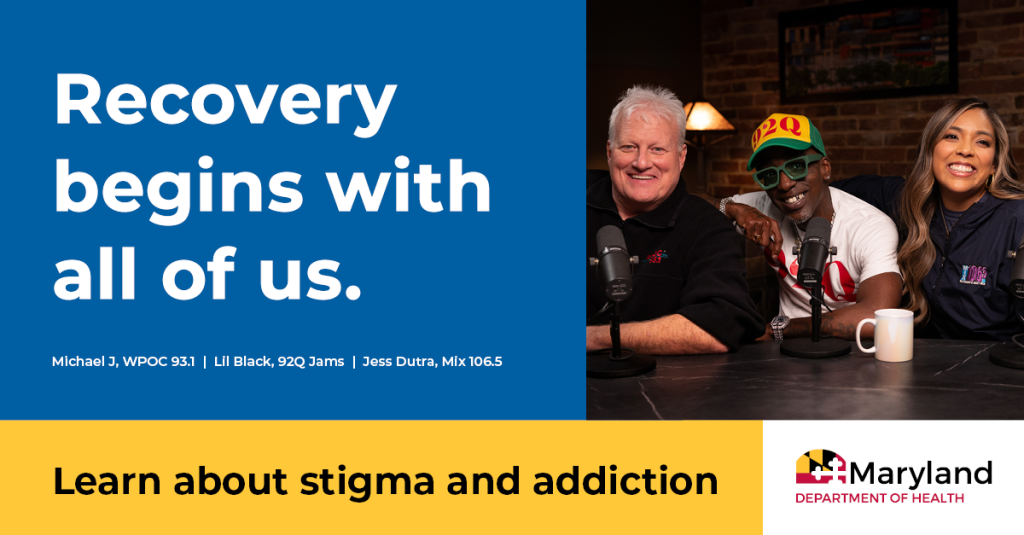
People with substance use-related disorders face prejudice and discrimination due to a lack of understanding about the disease. Stigma – like prejudice and discrimination – can perpetuate the problem. Unfortunately, negative attitudes toward people who use substances or have mental health conditions are common.
Anti-Stigma Public Awareness Campaigns
Stigma Public Awareness Toolkit
Use these print and digital resources to share information about how to access naloxone in Maryland.
Resources on Reducing Stigma
- Word Matter: Explore the terms to avoid and learn suggested alternatives to help end stigma.
- Shatterproof: Learn about addiction stigma and the real impact it has on everyday life.
- On Our Own of Maryland: Peer-operated behavioral health organization for individuals with mental health and substance use needs.
- National Alliance on Mental Illness: Free education, skills training, and support.
- Maryland Addiction Consultation Services (MACS): Reducing stigma within the medical profession.
- American Psychological Association’s Inclusive Language Guide
Stories of Stigma Associated with Substance Use Disorder from Marylanders
One of the best methods for addressing stigma is to share experiences – to talk about the recovery journey and to listen to other people’s stories. This project asks Marylanders in recovery about their experiences and the success they’ve achieved despite the stigma they faced.
“The stigma experienced by individuals with behavioral health concerns is more toxic than the symptoms of the conditions they live with. Behavioral health concerns have treatments that counteract the negative effects of the condition – stigma leaves permanent scars and closes the door to possibility, hope, recovery, and wellness.”
 1-888-373-7888
 233733